A Day in the Life of a Community Transport Co-ordinator – Marcia Kidney – CTWeek26
As part of the Community Transport (CT) Association’s CT Week 26, we will be shining a light on the people who help to keep CT running. From organising journeys and supporting volunteers to working with local organisations and tackling transport challenges, there’s a lot more happening than most people realise.
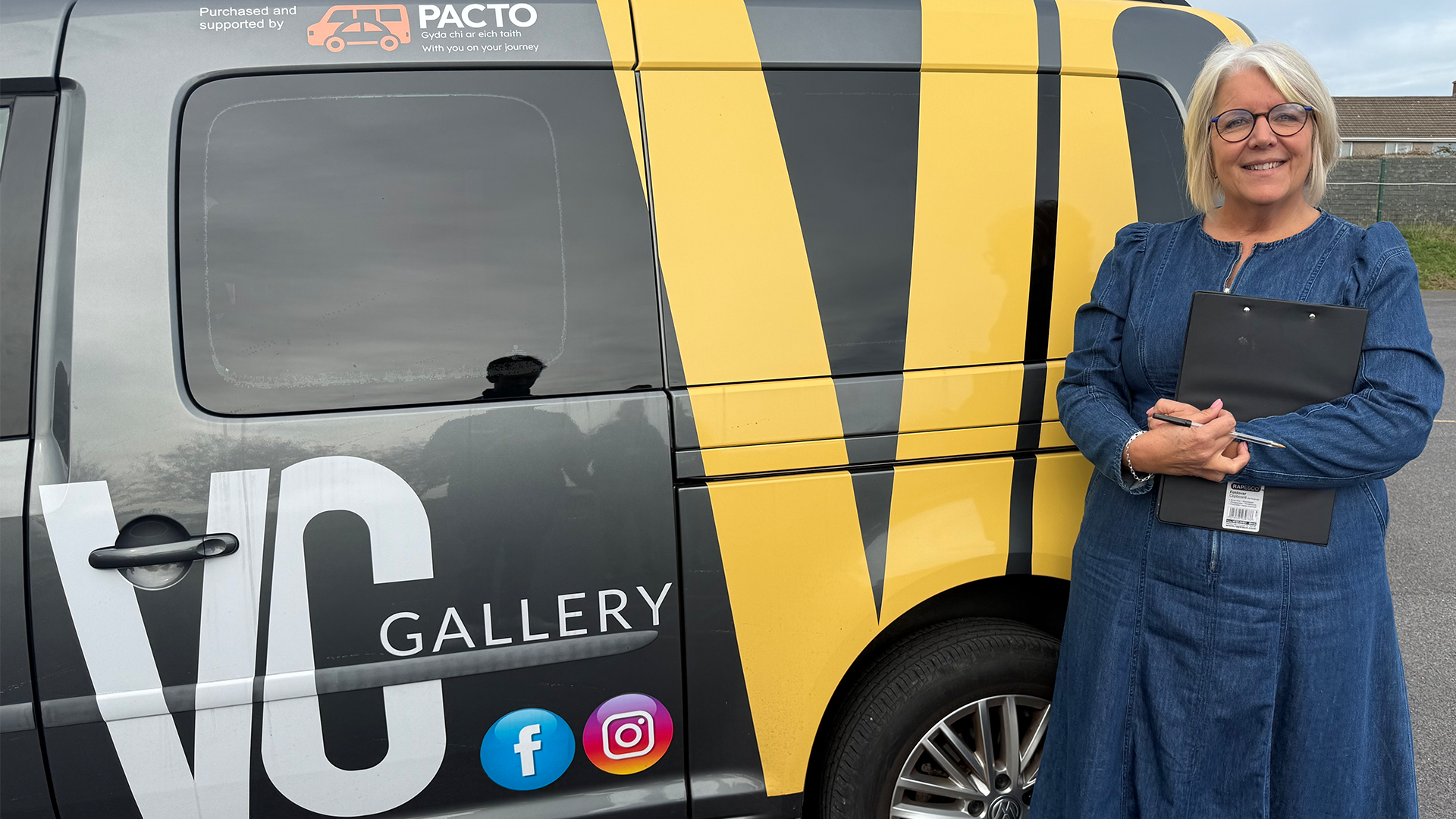
On Day Four, we hear from Marcia Kidney, who is the Community Transport Co-ordinator at the VC Gallery.
Could you introduce yourself and your role?
My name is Marcia, and I work at the VC Gallery in Pembroke Dock. As part of my role, I coordinate our community transport, helping to make sure that the people who use our services can access activities, appointments, and opportunities that they might otherwise struggle to reach. What attracted me to community transport was the difference something as simple as a journey can make to somebody’s life. For many of the people we support, transport isn’t just about getting somewhere, it can be the difference between being able to take part in the community and being isolated at home. What motivates me is knowing that we’re helping people stay connected, independent, and involved. I enjoy working with people and finding practical solutions, and community transport brings those two things together.
What does a typical day look like for you?
Well, my day usually starts by checking what journeys and activities we have planned and making sure everything is in place. I look at our bookings, check which vehicles are needed, and ensure we have volunteer drivers available. We use the OPTiMiSe system to help manage our minibus bookings and vehicle information alongside our calendar, so organisation is really important. I also need to be aware of practical things such as vehicle availability and making sure information is communicated clearly to our drivers. Throughout the day, I can be doing anything from arranging transport and speaking to volunteers to dealing with enquiries or making changes when circumstances alter. Supporting our volunteer drivers is a particularly important part of the role. Our drivers give their time to help other people, so I want to make sure they feel supported, have the information they need, and have access to appropriate training, including MiDAS and safeguarding training, working with other organisations; Community Transport doesn’t operate in isolation. A big part of our work at the VC Gallery involves building relationships with other organisations and services in our community. This can include local community organisations, health service, voluntary groups, and other partners. Good communication is essential because we all ultimately are trying to achieve the same thing: helping people access the support, activities, and opportunities they need. It’s also important to understand that our own service is there to provide. Our vehicles are primarily there to enable people to access the VC Gallery’s activities and support rather than operating as a general dial-a-ride service. Being clear about that helps us use our resources where they can make the greatest difference.
Tell us a bit about problem-solving and flexibility
Well, no two days are exactly the same in Community Transport, and you have to be prepared for things to change. A driver might suddenly become unavailable, somebody may need to change their plans, or several transport requests might need coordinating at the same time. When that happens, I try not to panic. I look at what we have available, prioritise what needs to happen, and communicate with everyone involved. Sometimes it means reorganizing a journey or finding another driver. It’s very satisfying when you manage to resolve something that initially looked difficult, and the person is still able to attend.
Is it more than just a journey?
I think this is probably the most important part of community transport. When you look at a booking on a calendar, it can appear to be simply a journey from one place to another. But behind that booking is a person. That person may live alone. They may not drive, may have mobility difficulties, or may have limited access to public transport. Coming to the VC Gallery may give them an opportunity to meet other people, take part in an activity, receive support, or simply have a conversation. For somebody who has become isolated, that can be incredibly important for their wellbeing and confidence. Our drivers are also often a friendly and familiar face. The journey itself can become part of the person’s experience rather than simply a means of getting somewhere.
Can you share a memorable experience?
Well, one experience that particularly stays with me was when we were asked to help a gentleman and his wife attend his brother’s funeral. The gentleman was a wheelchair user and was unable to use a standard taxi. Without suitable accessible transport, he and his wife had no way of getting to the funeral. Fortunately, we were able to use our accessible vehicle to collect them from their home, take them to the church for the funeral service, and then on to the crematorium afterwards. A few days later, his wife, who had previously used the VC Gallery to attend some of our activities, contacted us to thank us. She explained just how much it had meant to her husband to be able to attend his brother’s funeral and have the opportunity to say goodbye. That experience has stayed with me because what we provided that day was far more than transport. We enabled someone to be there for an important and deeply personal moment in his life at a time when he might otherwise have been unable to attend. For me, that sums up what community transport is really about. It’s about recognising the barriers people can face and whenever we can, finding a way to remove those barriers so that people are not excluded from the moments that matter.
Do you have any final reflections?
At the end of the day, my greatest sense of achievement comes from knowing that we’ve helped people get where they needed to be, and that because of that, they haven’t missed out. I’m also very proud of our volunteer drivers. Community Transport depends enormously on people being willing to give their time to help others, and I think that contribution deserves to be recognised. The most rewarding part of my role is seeing the human impact of what we do. Sometimes the practical things I do during the day, arranging a vehicle, contacting a driver, or changing a booking can seem quite small, but to the person relying on the transport, they can make a very big difference. I would like people to better understand that community transport isn’t simply about vehicles and journeys. It’s about tackling isolation. It’s about maintaining independence. It’s about enabling somebody to attend an activity, access support, meet other people, and remain part of the community. Sometimes, as with the gentleman we took to his brother’s funeral, it is about making sure someone isn’t prevented from being part of one of the most important moments in their family’s life simply because suitable transport isn’t available. Most importantly, Community Transport is about people looking out for people. And in conclusion, at the end of each day, I know that Community Transport is about more than getting people from A to B. It’s about removing barriers, connecting people, and making sure no one misses out on the moments that really matter, and that’s what makes this role so worthwhile.